Overview
Industrial valve selection is a critical step in designing reliable fluid control systems. Choosing the right industrial valve ensures safe operation, efficient flow control, and long-term durability in demanding industrial environments.
Industrial valves play a vital role in controlling the flow of liquids, gases, and slurries across numerous industries, including power generation, water treatment, chemical processing, oil and gas, and manufacturing. A properly selected valve ensures smooth operation, safety, and durability in demanding environments.

However, choosing the wrong valve can lead to issues such as leakage, pressure loss, equipment damage, and costly downtime. Engineers and procurement teams must therefore consider several technical and operational parameters before selecting a valve.

This guide explains the key factors involved in selecting the right industrial valve and highlights the most common valve types used across different applications.
Understanding Valve Function in Industrial Valve Selection
Before selecting a valve, the first step is to determine the primary function it needs to perform within the system. Industrial valves are typically used for one of the following purposes:
Isolation
Isolation valves are used to completely stop or allow fluid flow within a pipeline. These valves are typically either fully open or fully closed.
Common isolation valves include:
- Gate valves
- Ball valves
- Butterfly valves
Isolation valves are commonly used in maintenance scenarios where sections of pipelines need to be shut off for inspection or repair.
Flow Control
Some systems require precise regulation of flow rate rather than simple open or close functionality.
Valves designed for flow control allow operators to adjust the flow gradually.
Examples include:
- Globe valves
- Control valves
- Certain butterfly valves
These valves are widely used in systems where maintaining specific flow rates is essential for process efficiency.
Preventing Backflow
Check valves are used to prevent reverse flow in piping systems. These valves automatically close when the flow direction reverses.
Typical applications include the following:
- Pump discharge lines
- Water distribution systems
- Process pipelines
Backflow prevention helps protect equipment such as pumps and compressors from damage.
Key Factors in Industrial Valve Selection
Selecting the right valve requires evaluating several operational conditions within the system.
Type of Fluid (Media)
The type of fluid flowing through the pipeline has a significant impact on valve selection.
Important characteristics to evaluate include:
- Corrosiveness
- Viscosity
- Presence of solid particles
- Chemical compatibility
For example:
- Water systems often use butterfly or gate valves.
- Chemical processes may require stainless steel or alloy valves resistant to corrosion.
- Slurry applications often use knife gate valves due to their ability to handle suspended solids.
Material compatibility is essential to avoid premature valve failure.
Pressure Requirements
Industrial systems operate at different pressure levels, and valves must be capable of handling those conditions safely.
High-pressure applications require valves with:
- Strong body construction
- Reliable sealing mechanisms
- Pressure-rated components
Ball valves and gate valves are commonly used in higher-pressure environments because they provide strong sealing capabilities.
Selecting a valve that cannot handle system pressure can lead to serious safety risks and equipment damage.
Temperature Conditions
Temperature is another crucial factor when selecting a valve.
High temperatures may affect:
- Valve body materials
- Sealing components
- Actuator performance
For example:
- Steam systems in power plants require valves designed for high-temperature operation.
- Certain elastomer seals may fail under extreme heat.
Always verify the temperature rating of valve materials and seats before selection.
Flow Characteristics
The flow characteristics of the system determine how effectively the valve will control the process.
Some valves are better suited for:
- On/off isolation
- Throttling flow
- High-volume fluid transfer
For example:
- Ball valves provide minimal flow resistance when fully open.
- Butterfly valves are ideal for large-diameter pipelines.
- Globe valves offer better flow control but create higher pressure drop.
Understanding how the valve interacts with the fluid dynamics of the system is essential for efficient operation.
Pipe Size and System Layout
Valve selection must also align with the pipeline size and installation requirements.
Important considerations include:
- Pipe diameter
- Space constraints
- Installation orientation
- Weight of the valve
Engineers often prefer butterfly valves for large pipelines because they are lighter and easier to install compared to gate valves.
Compact designs are especially valuable in systems with limited installation space.
Automation and Actuation
Modern industrial systems increasingly use automated valve control.
Valves can be operated using:
- Manual handles or gear operators
- Electric actuators
- Pneumatic actuators
- Hydraulic actuators
Automation provides several advantages:
- Improved operational efficiency
- Faster response times
- Remote control capability
- Enhanced safety in hazardous environments
When automation is required, it is important to ensure the valve design is compatible with the selected actuator system.
Industrial Valve Types Used in Valve Selection
Understanding different valve types can help engineers determine the most suitable option for their application.
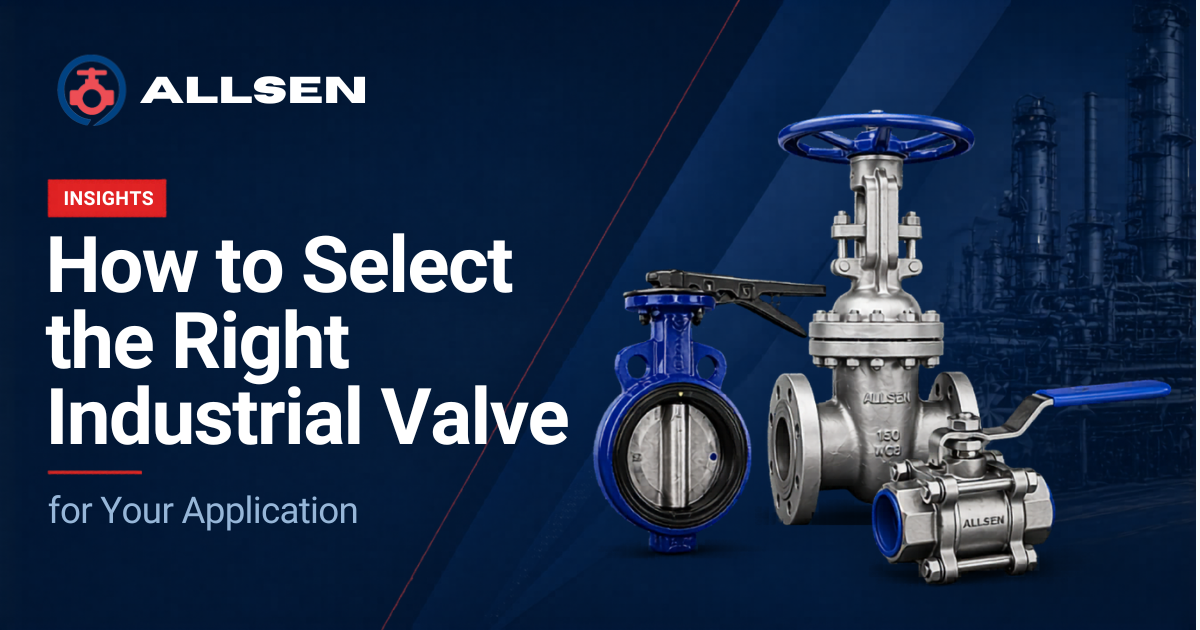
Butterfly Valves
Butterfly valves use a rotating disc to control flow.
Advantages include:
- Lightweight design
- Compact installation
- Cost-effective for large pipelines
These valves are commonly used in:
- Water treatment plants
- HVAC systems
- Power generation facilities
Ball Valves
Ball valves use a rotating spherical ball with a bore to control fluid flow.
Key benefits include the following:
- Excellent sealing performance
- Quick quarter-turn operation
- High durability
Ball valves are widely used in industries requiring reliable shut-off capabilities.
Gate Valves
Gate valves use a sliding gate to stop or allow flow.
They are best suited for:
- Isolation applications
- High-pressure pipelines
- Systems requiring full flow with minimal resistance
Gate valves are commonly used in oil and gas pipelines and large industrial installations.
Check Valves
Check valves allow flow in one direction and prevent reverse flow.
Common applications include:
- Pump protection systems
- Water supply networks
- Industrial processing plants
These valves operate automatically without manual intervention.
Knife Gate Valves
They are widely used in:
Manufacturers design knife gate valves for handling thick fluid and slurry applications.
- Mining operations
- Pulp and paper industries
- Wastewater treatment facilities
The blade-like gate cuts through solid particles in the fluid.
Importance of Proper Valve Maintenance
Selecting the correct valve is only the first step toward ensuring reliable performance. Proper maintenance practices are equally important.
Routine inspection should include:
- Checking for leakage
- Monitoring actuator performance
- Inspecting sealing surfaces
- Cleaning and lubrication when required
Preventive maintenance reduces the risk of unexpected system failures and extends the lifespan of valves.
Industrial facilities that implement regular maintenance programs often experience lower operating costs and improved system reliability.
Conclusion
Choosing the right industrial valve requires careful evaluation of system requirements, fluid characteristics, pressure and temperature conditions, and operational objectives. No single valve type is suitable for every application.
Engineers and procurement teams must assess these factors thoroughly before selecting a valve to ensure optimal performance and safety.
By understanding how different valves function and where organizations can best apply them, they can build more reliable systems and reduce operational risks.
A well-selected valve not only improves efficiency but also contributes significantly to long-term process stability.
FAQ’s
Many industries commonly use ball valves and gate valves in high-pressure systems due to their strong sealing capabilities and robust construction.
Butterfly valves are ideal for large pipelines, water distribution systems, and applications requiring lightweight and cost-effective solutions.
Inspection schedules vary depending on system conditions, but many facilities conduct routine checks every 6–12 months to ensure optimal performance.
Yes. Many industrial valves can have electric or pneumatic actuators equipped for automated operation and remote control.
Common causes include corrosion, excessive pressure, improper material selection, seal wear, and lack of maintenance.
Need Help Selecting the Right Valve?
Selecting the right valve for your application can be complex, especially in demanding industrial environments.
ALLSEN’s engineering team can help you identify the most suitable valve solutions for your system requirements.
Contact us to learn more about our industrial valve solutions, actuators, and maintenance services.